

Custom Mobile App Development Services for Mid-Market Teams
A mobile app that can't reach your Salesforce, your ERP, or your data is just a second screen. Our mobile app development services build the opposite: apps wired into the systems mid-market teams already run on, so work moves between the field and the back office instead of stalling.
- 85%+
user retention after 3 months.
- 2.5x
increase in referrals.
- 80%
sales team adoption.

Cross-platform mobile app development services
Cross-platform mobile app development builds one codebase that runs on both iOS and Android, instead of two separate native apps. It ships to the Apple App Store and Google Play from the same source, which cuts build cost, speeds up delivery, and lands every fix on both platforms at once. We build cross-platform mobile app development on Ionic, sharing that codebase with the web where it makes sense.
For most business apps, workflows, data capture, dashboards, and integrations, this is the right call. When an app needs heavy 3D, frame-perfect gaming, or a brand-new platform feature on day one, native is worth the cost, and we will tell you that rather than selling you on a build we would have to fight later on.
What do our mobile app development services include?
Custom mobile app development services should match the job, not force every product down the same path. Some teams need a full app in both stores. Others need a lightweight web app first, or field tools that keep working with no signal. Here is how we scope each build and when we would recommend it.
Mobile-responsive web apps
A progressive web app (PWA) runs in the browser and installs like a native app, with no store submission. Choose it when you need to validate an idea fast, reach users across desktop, tablet, and phone from one build, or ship an MVP before committing to native. It is also the right call for internal tools that live behind a login, where the friction of a store download buys you nothing. We build these on the same foundation as our custom web application development, so a PWA can grow into a full app later without a rewrite.
Accessible design and offline use
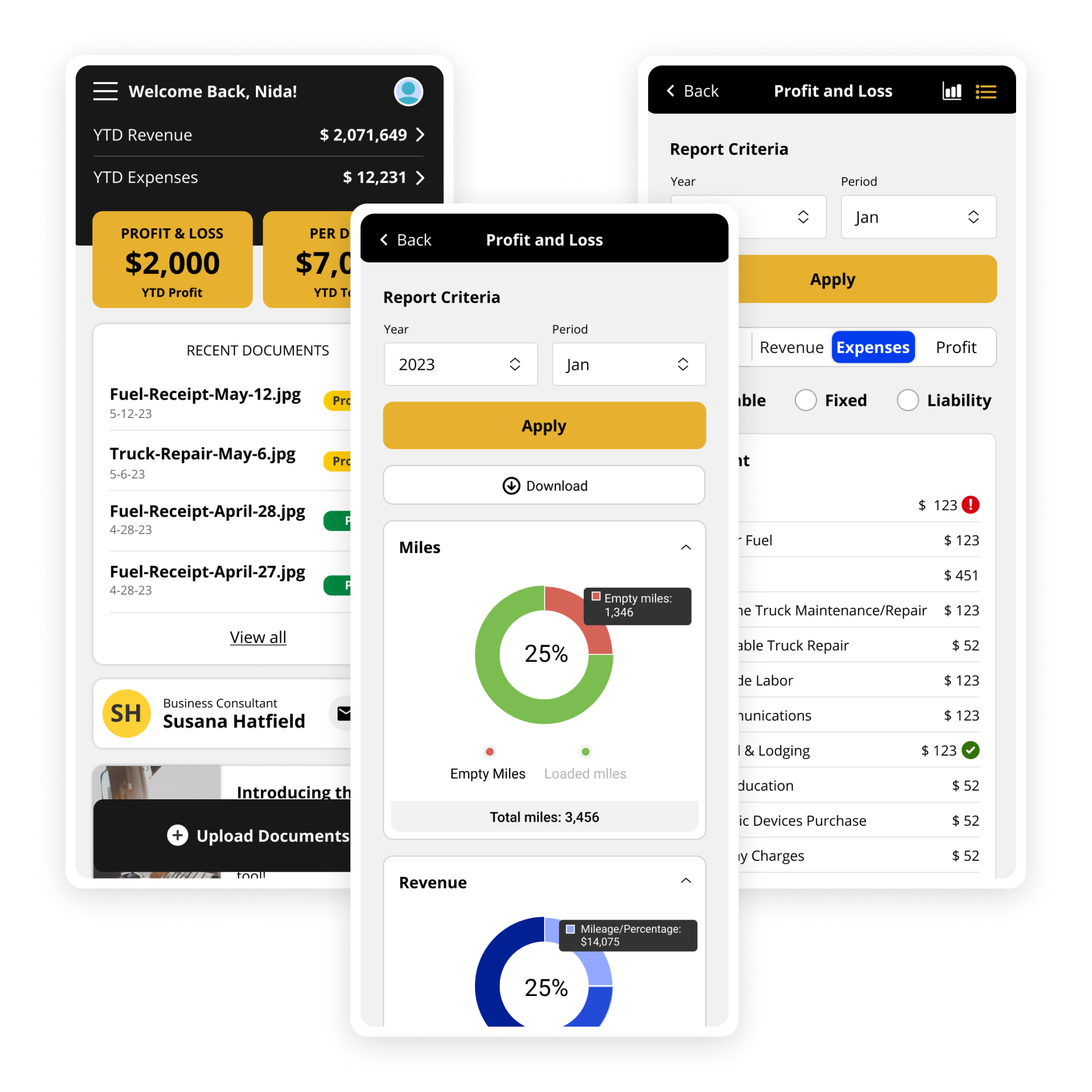
Field teams do not get to assume a signal. Warehouses, job sites, trucks, and clinics all have dead zones, so an app that only works online is an app that fails at the worst moment. We build offline-first: data is captured on the device, queued, and synced the moment a connection returns, so nothing is lost between the field and the system of record. Accessibility is built to the Web Content Accessibility Guidelines (WCAG), so the app works for every user and clears the bar that a regulated buyer has to ask about.
Connected experiences
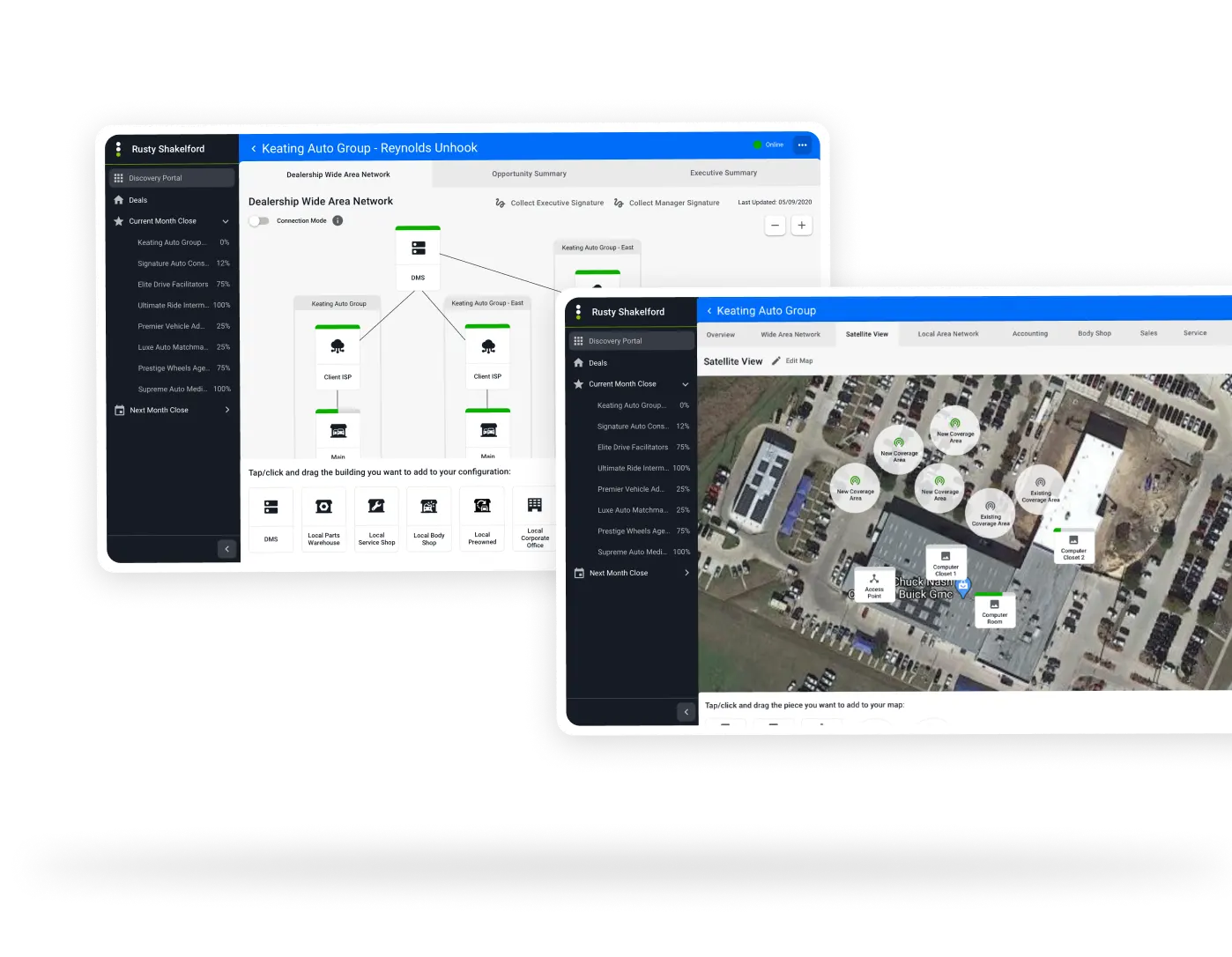
Most mobile value shows up when the app is wired into the systems your business already runs on. We build apps that push real-time alerts, sync with Salesforce and ERP (enterprise resource planning) systems, control connected devices, and surface live dashboards, so the phone becomes a working part of the operation instead of a second place to check. Choose this when the app has to move data both ways, not just display it.
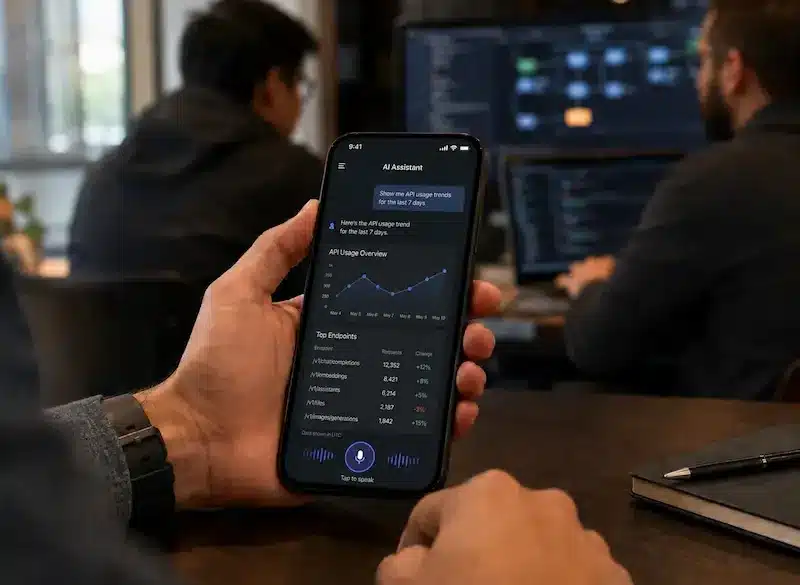
Mobile-accessible applications that work wherever you work
- For the business: limited mobile access creates bottlenecks and lost revenue. We move work in real time between the field, the office, and your system of record.
- For your users: slow, confusing apps get abandoned. We design for the task the user came to do and test on real devices, so they come back.
- For your teams: without mobile tools, decisions wait. We put the system of record in their pocket, online or off, so the job gets done on the spot.
How we build your mobile app

Blueprint Workshop (2 to 6 weeks)
Two to six weeks to find out whether the app is worth building before you commit real budget. We map the workflow, pin down the integrations, and pressure-test the idea against real constraints. You leave with a scoped plan and a clear go or no-go, not a slide deck. You also see how we deliver: our Nova model, where AI writes production code and senior engineers shape, review, and ship it.

Design and accelerated build (6 to 10 weeks)
Design and engineering run in two-week sprints, with working software at every checkpoint. Our App Accelerator supplies pre-built mobile foundations, authentication, offline sync, push, and CRM (customer relationship management) connectors, so the team spends its time on what makes your app yours. Integrations happen early, so the app is talking to Salesforce, your ERP, or your database while there is still time to change course.

Store launch and MDM rollout (1 to 2 weeks)
We handle Apple App Store and Google Play submission and review, plus enterprise distribution through mobile device management (MDM) when the app is for your own workforce. You get a clean launch, not a scramble the week before go-live.

Managed services and continuous improvement (ongoing)
After launch, we stay on. Ongoing support and enhancement means monitoring, fixing bugs, and a roadmap of new features driven by real usage, so the app keeps pace with the business instead of beginning to age the day it ships.
How do you handle mobile app security and compliance?
Security is built into every mobile app we ship, not added at review time. For teams in financial services or healthcare, here is exactly how we handle it.
| Area | How we handle it |
| Data at rest | Encrypted on the device. |
| Data in transit | Encrypted over TLS (Transport Layer Security). |
| Authentication | Role-based access, with single sign-on (SSO) and multi-factor authentication (MFA) where you require it. |
| Compliance | HIPAA-standard builds: audit logging, least-privilege access, and review-ready data handling. |
| Data ownership | You own your data. We document where it lives and how it moves. |
Industries we build mobile apps for
We build mobile apps for regulated, data-heavy industries where the app has to work with real systems and clear a real bar.
Financial services
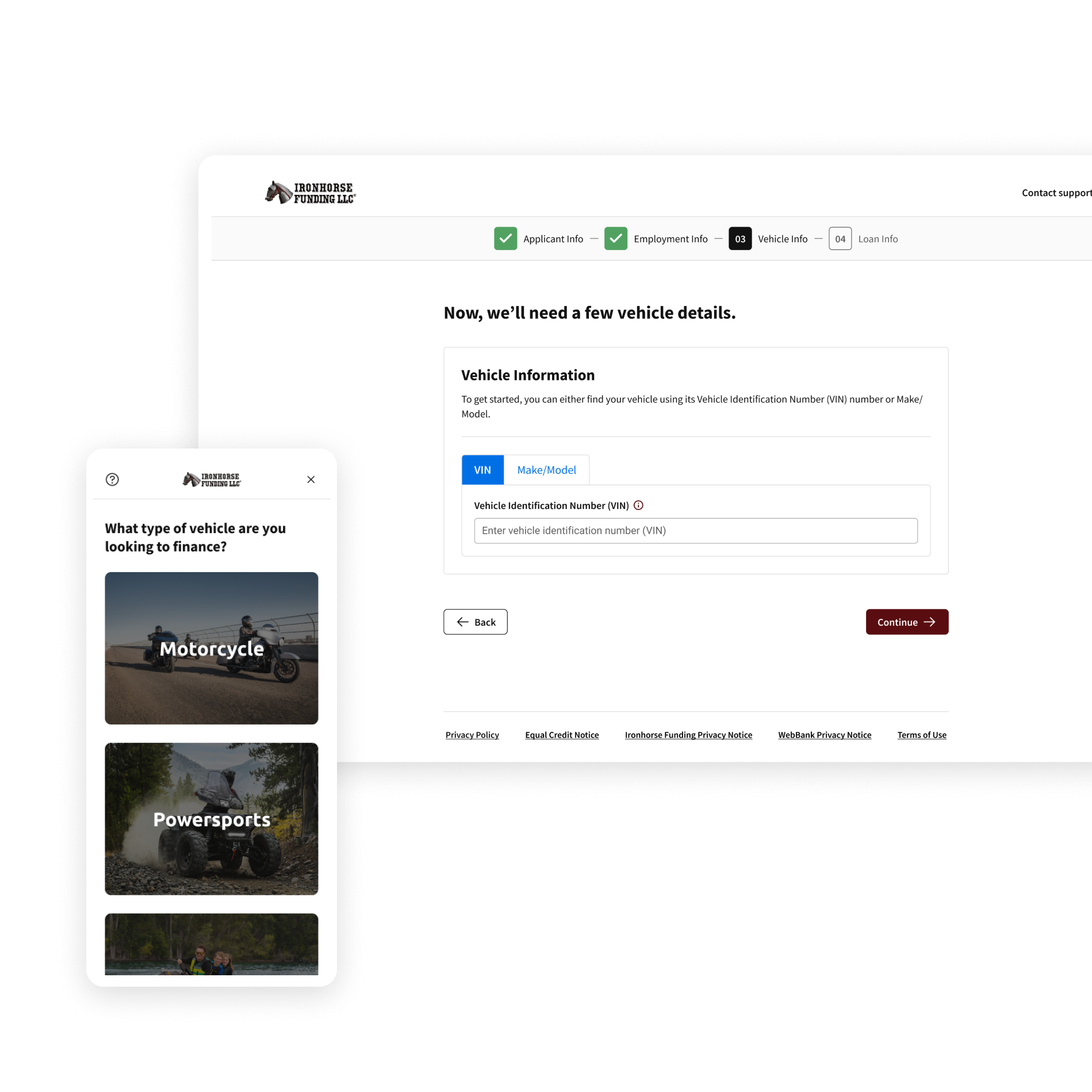
We build field and member-facing apps wired to your core systems, with the access controls and audit trails the sector expects. Everything stays traceable where accuracy and compliance matter.

Healthcare
We build HIPAA-compliant apps for clinical and operational work, with role-based access and audit-ready records. Sensitive data is handled to the standard the field requires.

Legal
We build document-heavy, security-sensitive tools: matter access, secure client communication, and offline review. Privileged data stays off unmanaged devices and inside your controls.




Frequently Asked Questions
What's the difference between a native app and a hybrid mobile app?
Native apps are platform-specific. Hybrid apps (like the ones we build with Ionic) work across iOS and Android, reducing cost and speeding up delivery without sacrificing performance. For most business apps, one hybrid codebase gives you native-grade performance and a single product to maintain instead of two. When a product genuinely needs deep native capability, we will tell you.
How do you handle security and compliance?
We encrypt data at rest on the device and in transit over TLS, control access with role-based authentication, and build to HIPAA standards where an app handles protected health information. Digital Dental Solutions shipped a HIPAA-compliant app with us in three months. See the security and compliance section above for how we handle data on the device, authentication, and audit logging.
Can you take over an app another team built?
Yes. Taking over an app another team built is a common way our projects start. We begin with a short audit of the codebase, the infrastructure, and the store accounts, and tell you honestly what is worth keeping and what needs to be reworked, then stabilize it before adding anything new. You get a clear picture of what you inherited before we touch it.
Can we launch on both iOS and Android?
Yes, our hybrid development approach allows us to launch simultaneously on iOS and Android with a single codebase. That means faster delivery, easier maintenance, and consistent performance across both platforms.
How do you decide between a mobile app and a mobile-responsive website?
It depends on what your users need. If your product involves complex functionality, offline use, or deeper device integration, mobile apps are the way to go. For lighter use cases or MVPs, a mobile-responsive web app or PWA may be the better fit. We’ll guide you to the right solution.
Do you handle App Store deployment?
Yes, we manage the publishing process for iOS and Android, and also support enterprise delivery through MDM if needed. That includes submission, review, and the store-listing details that slow most teams down.
How much does a mobile app cost to build?
Cost depends on scope, so we answer it with the drivers rather than a sticker price. The big ones: whether you build one cross-platform codebase or two native apps, how deep the integration into Salesforce or an ERP goes, whether HIPAA or other audit work is in scope, offline capability, and ongoing support. We start most projects with a fixed-scope Blueprint Workshop, which gives you a real number for your specific build before you commit to it.
Who owns the code and the developer accounts?
You do. You own the source code, the repositories, and your Apple and Google Play developer accounts, and we set them up in your name from the start. We build so you are never locked into us to keep the app running. If you ever move it in-house or to another team, the handoff is clean and documented.
Where is the app hosted?
While the app itself is distributed through the Apple and Google Play stores (or enterprise MDM), the backend typically runs on scalable cloud platforms like Render or AWS. We’ll help you choose the right hosting setup for your performance, security, and cost needs.
Can we integrate with our CRM or backend systems?
Absolutely. We specialize in apps that connect with Salesforce, ERP systems, and other internal tools, keeping data in sync and workflows simpler. Integrations are scoped early in the build, not bolted on at the end.
How fast can we launch a mobile app?
Our App Accelerator, a library of pre-built mobile foundations like authentication, offline sync, and CRM connectors, lets the team skip rebuilding plumbing and focus on what is unique to your app. Many apps launch in 6 to 12 weeks, depending on scope and feature depth. The Blueprint Workshop sets a realistic timeline for your build before work starts.
What happens after launching a mobile app?
We support post-launch iterations with user feedback, performance tracking, and ongoing mobile app feature development. We’ll roadmap what’s next and make sure your app continues to evolve as your business does.

Ready to Build Something Great?
Partner with us to develop technology to grow your business.