
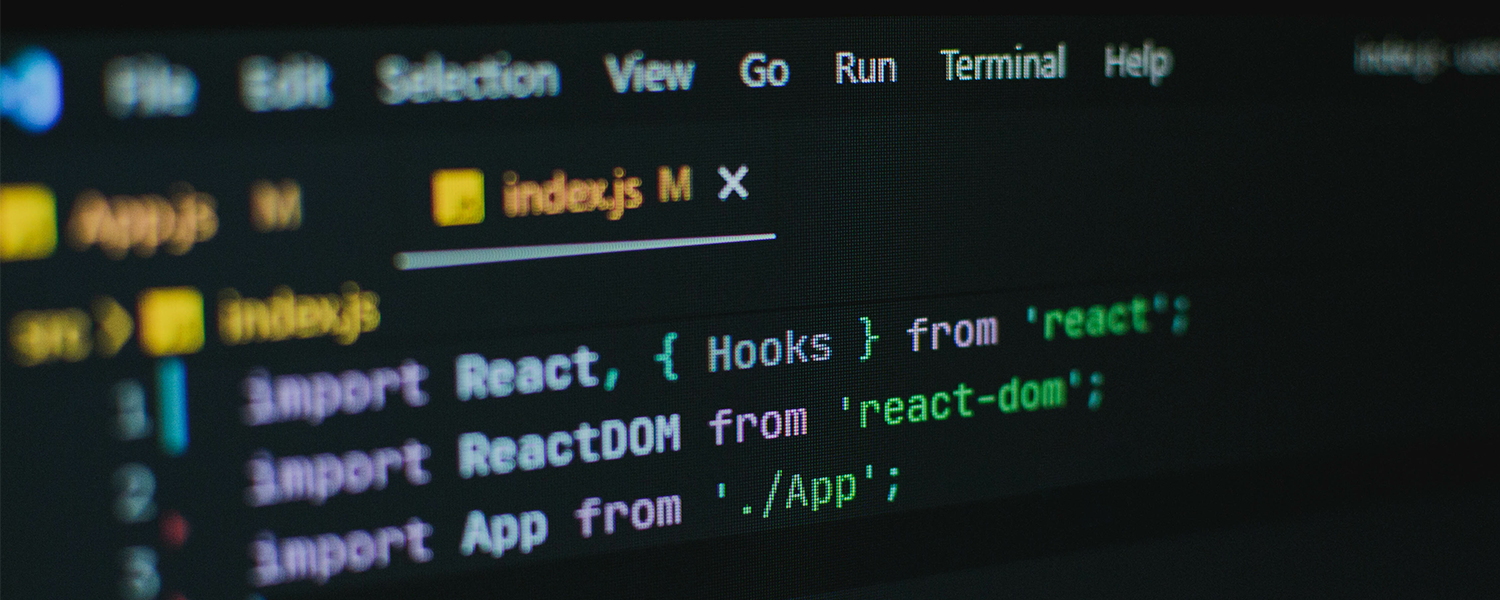

React.js Development Services
LaunchPad Lab builds production-grade React.js applications for products that need to move fast, handle real load, and support users across complex, data-intensive workflows.

What Is React.js?
React.js is a JavaScript library developed by Meta for building interactive user interfaces. It is not a full framework. React handles the view layer only, which gives engineering teams precise control over the rest of the architecture: state management, routing, and server communication are each handled by purpose-built libraries chosen to fit the project.
That distinction matters in practice. React’s component model lets teams break a complex UI into discrete, reusable pieces, each managing its own state and communicating with others through well-defined props. It is the approach we use at LaunchPad Lab for dashboards, multi-step workflows, and platforms that need to remain maintainable as they grow.
React is the most widely adopted frontend library for production web applications. It pairs cleanly with Ruby on Rails, Node.js, Python, and .NET backends, and forms the foundation for React Native mobile development.
- 22M+
Weekly npm downloads
making React the most downloaded frontend library in the JavaScript ecosystem
- 42%
Of professional developers
use the React framework
- 43%
Market share
among JavaScript frameworks, ahead of Vue.js, Angular, and Svelte
Why We Build with React.js?
React has been a core part of LaunchPad Lab's stack for over a decade. Here is what consistently makes it the right choice for complex web products.

Component-based architecture
React organizes the UI into discrete, reusable components, each managing its own state and passing data to others through props. On the Prosci project, this let us build six separate product surfaces from a shared component library without duplicating logic or creating inconsistency across the platform.

Performant rendering under real load
React’s virtual DOM reconciles updates efficiently, re-rendering only what changed. For Empower Illinois, this contributed to a UI that stayed responsive during windows of more than 100,000 concurrent scholarship submissions, with no perceptible lag for families waiting on confirmation.

Backend-agnostic by design
React handles the view layer only, so it connects cleanly to any API: Ruby on Rails, Node.js, Python, .NET, Java, or PHP. It also integrates well with third-party platforms. We have shipped React applications integrated with Salesforce CRM, Contentful for content delivery, and AWS for infrastructure.

Readable code that grows with your team
React’s declarative syntax makes it straightforward to read and reason about, even as a codebase scales. That matters when onboarding new engineers or eventually handing off a product to an internal team. The predictable component structure also makes debugging faster and code reviews more productive over time.

React as the interface layer for AI products
AI logic runs server-side. React handles what the user sees and interacts with. That separation keeps AI-powered products maintainable: the model or provider can change without touching the frontend, and the React UI stays focused on rendering responses cleanly regardless of latency.
In practice this means streaming model output rendered token by token, conversation state managed across a session, skeleton states while a model processes, and graceful fallbacks when an API is slow or unavailable. These are standard React patterns applied to an AI context.
We integrate React frontends with the Anthropic Claude API, OpenAI, and custom RAG pipelines. The server-side layer handles prompt engineering, rate limiting, and data access controls. React surfaces the result.
What clients experience when we build in React
These are the outcomes that show up consistently across React projects, based on what we have shipped and maintained with clients over time.

Faster development cycles
React’s component model makes it straightforward to build and reuse UI patterns across a product. Teams that invest in a solid component library early move significantly faster in later sprints, particularly when adding new features to an existing application.

Reliable performance under load
React’s virtual DOM keeps rendering efficient even when a UI is handling frequent data updates or high user concurrency. Paired with appropriate backend and infrastructure decisions, React applications scale without requiring a frontend rewrite as traffic grows.

Maintainability over time
The declarative component structure makes it easier for engineers to understand and modify code written by someone else. That matters especially for products that require ongoing iteration, or that will eventually be handed off to an internal engineering team.

A path to mobile via React Native
Organizations that build in React for web have a meaningful head start when extending to mobile. Business logic, API integration patterns, and state management can be shared directly with a React Native codebase, reducing redundant engineering investment across platforms.

When LaunchPad Lab recommends React.js
React is a strong fit for most complex web application projects. Here are the situations where we consistently recommend it.
- Your product has a complex, stateful UI with many interactive components that update frequently
- You need to move fast and maintain development velocity as the codebase grows over time
- You are building on a Ruby on Rails, Node.js, or Python API backend
- The application needs to integrate with Salesforce, Contentful, or other third-party platforms
- You may extend the product to mobile via React Native and want to share business logic across platforms
- The application needs to scale to support many users, multiple languages, or high-volume data operations
- You want a frontend that an internal team can maintain after the initial build
Frequently Asked Questions
What is React.js used for?
React.js is a JavaScript library for building interactive user interfaces. It is particularly well-suited for applications with complex, frequently updated state: dashboards, multi-step workflows, real-time data tools, and platforms with large component libraries. At LaunchPad Lab, we use React as the frontend layer for data-intensive web applications, most often paired with a Ruby on Rails API backend.
Can React.js handle high-traffic applications?
Yes. React’s virtual DOM updates only the parts of the UI that changed, keeping rendering performant under load. That said, handling high traffic is a full-stack concern. We engineered the Empower Illinois platform to accept over 100,000 concurrent applications per minute, which required architecting the Rails backend and AWS infrastructure alongside the React frontend to handle those bursts without failure.
What backend systems can React.js integrate with?
React is backend-agnostic and connects to any REST or GraphQL API. We have shipped React applications backed by Ruby on Rails, Node.js, and Python, and integrated with third-party platforms including Salesforce, Contentful, Heroku, and AWS. The choice of backend depends on your project’s requirements, your existing infrastructure, and your team’s expertise.
How long does it take to build a React.js application?
Timeline depends on product complexity, the number of integrations required, and how much design and discovery work is needed upfront. A well-scoped MVP for a focused use case can ship in two to four months. Larger, multi-surface platforms are longer-running engagements. LaunchPad Lab works through a scoping process at the start of each project to give clients a realistic, evidence-based timeline before development begins.
Can React.js handle AI features like chat interfaces and streaming responses?
Yes. React handles the UI patterns AI features require: streaming output rendered token by token, conversation state maintained across a session, skeleton states while a model processes, and graceful fallbacks when an API is slow or unavailable. The AI logic runs server-side and communicates with the React frontend through standard API endpoints. The two layers stay decoupled, so the model or provider can be swapped without a frontend rewrite.
Is React.js a framework or a library?
React is a library, not a full framework. It handles the view layer only, giving engineering teams precise control over the rest of the architecture. State management, routing, and server communication are handled by separate libraries chosen based on the project’s needs. This flexibility is one of the reasons React is the most widely used frontend library for complex web applications.
Does React.js work well with Ruby on Rails?
Yes, and it is the combination we use most often. React runs as the frontend view layer while Ruby on Rails handles routing, business logic, database management, and authentication. This pairing gives teams the reliability and convention of Rails with the performance and component flexibility of a modern frontend. It is the architecture behind several of our most complex production applications.
Can a React web app share code with a React Native mobile app?
Yes, to a meaningful degree. React and React Native share the same component model and state management patterns. Business logic, API integration code, and state management libraries can often be shared directly between the two platforms. UI components require separate implementations, but the architectural consistency across web and mobile reduces ramp-up time and long-term maintenance overhead considerably.
Does LaunchPad Lab offer React.js support after launch?
Yes. LaunchPad Lab’s managed services practice provides ongoing support, enhancement, and maintenance for React applications post-launch. This includes bug resolution, performance monitoring, dependency updates, and iterative feature development. The same engineering team that builds the product can continue to support it, which reduces handoff overhead and keeps institutional context intact.
What AI services does LaunchPad Lab integrate with React applications?
We integrate React frontends with the Anthropic Claude API, OpenAI, and custom fine-tuned or retrieval-augmented generation (RAG) pipelines depending on the project’s requirements. The React interface layer stays decoupled from the AI backend, so the underlying model or provider can be swapped or extended without a frontend rewrite. Server-side prompt engineering, rate limiting, and data access controls are handled alongside the React build to keep AI features safe and predictable in production.

Ready To Build Something Great With React.JS?
Whether you are starting a new product or scaling an existing one, LaunchPad Lab can help you build a React application that performs under real conditions and holds up over time.