

Financial services software development for mid-market teams
Financial teams end up working around their core system instead of with it: data scattered across custodians, reports reconciled by hand, new products stuck waiting on IT. Our financial services software development fixes that with portals, compliance workflows, and custodian data platforms wired into the core you already run. One in-house team, from first call to launch.
- 3
months to build and launch a wealth management firm's client giving platform
- 360°
view of the client as a single source of truth for Summit Trail Advisors
- 90%
less time scheduling experts for Apex Leaders

How our financial services software development delivers business results
Financial software earns its place in production, not in a demo. The hard part is not the screens; it is reconciling data from every custodian and feed, keeping the audit trail clean, and staying accurate a year after launch when the core, the regulators, and the business have all moved. That is where our work focuses. Because we are product engineers first, every recommendation is judged against what actually ships on your stack, not a slide deck.
When you are choosing a financial software development company, that is the difference that matters: a partner who builds software your team relies on every day, not a proof of concept that stalls before production. We have shipped 760+ projects over 14+ years for teams in finance, healthcare, and legal, and much of our financial work runs on Salesforce, a depth few development firms can match.
Software development for financial services: what we build
Custom is worth it when an off-the-shelf tool cannot handle how your firm actually works, or when the real problem is getting your core, custodians, and systems of record to talk to each other. Here is what we build most for banks, lenders, wealth managers and investment firms.
Client and account portals
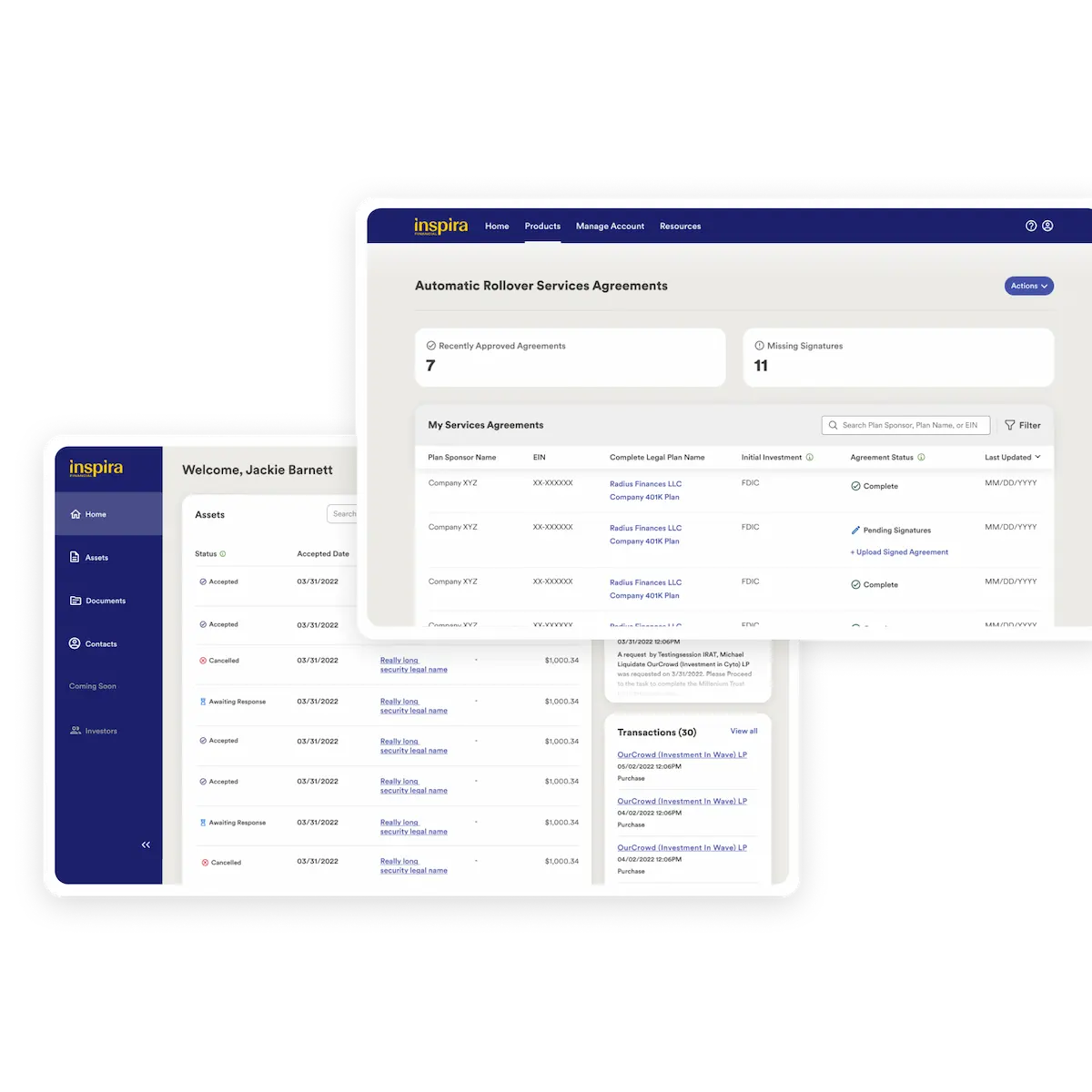
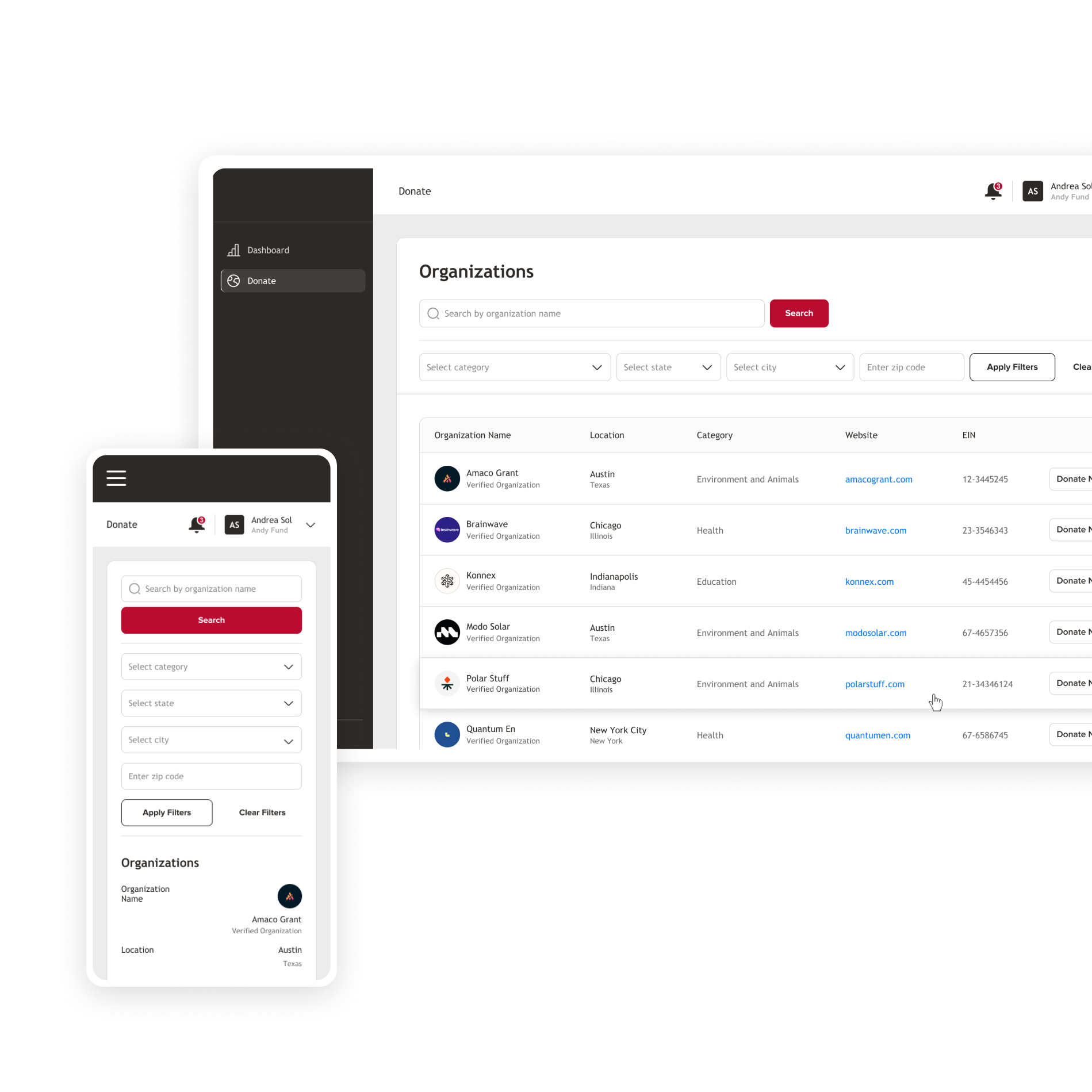
Secure portals that let account holders, borrowers, and investors see their own data and act on it, without a call to your team. We build these as custom web application development projects, integrated with your core system, so the portal and the record of truth never drift apart.
Custodian data platforms and a single source of truth
Systems that pull data from every custodian, feed, and legacy database into one clean, current view, so your team stops reconciling by hand. This is usually the hardest part of a financial build, because the data arrives in a different shape from every source.
Loan origination and pre-qualification systems
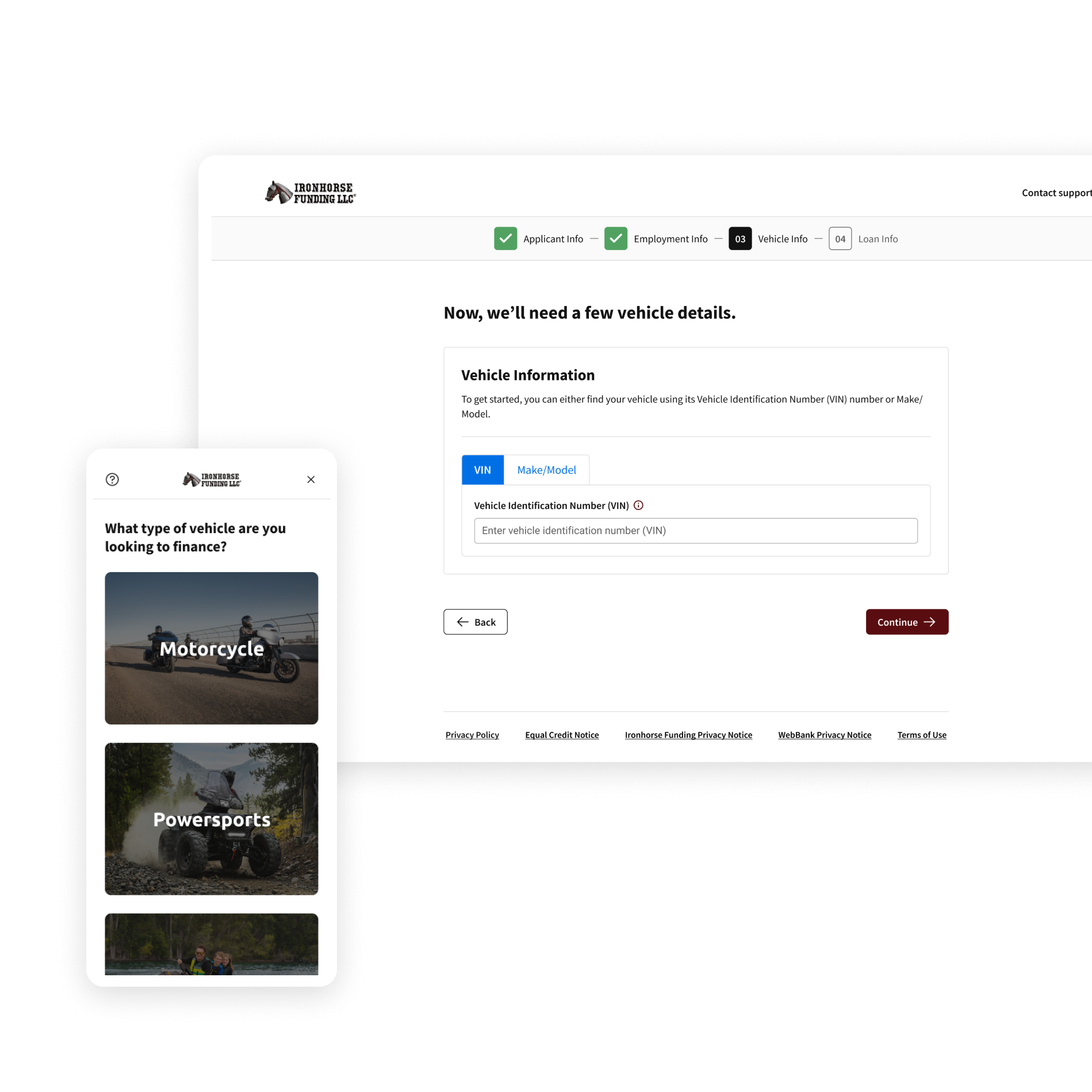
Application and pre-qualification systems that move a borrower from interest to decision without the manual back-and-forth, with the credit and compliance checks handled behind the scenes.
Document processing and back-office automation
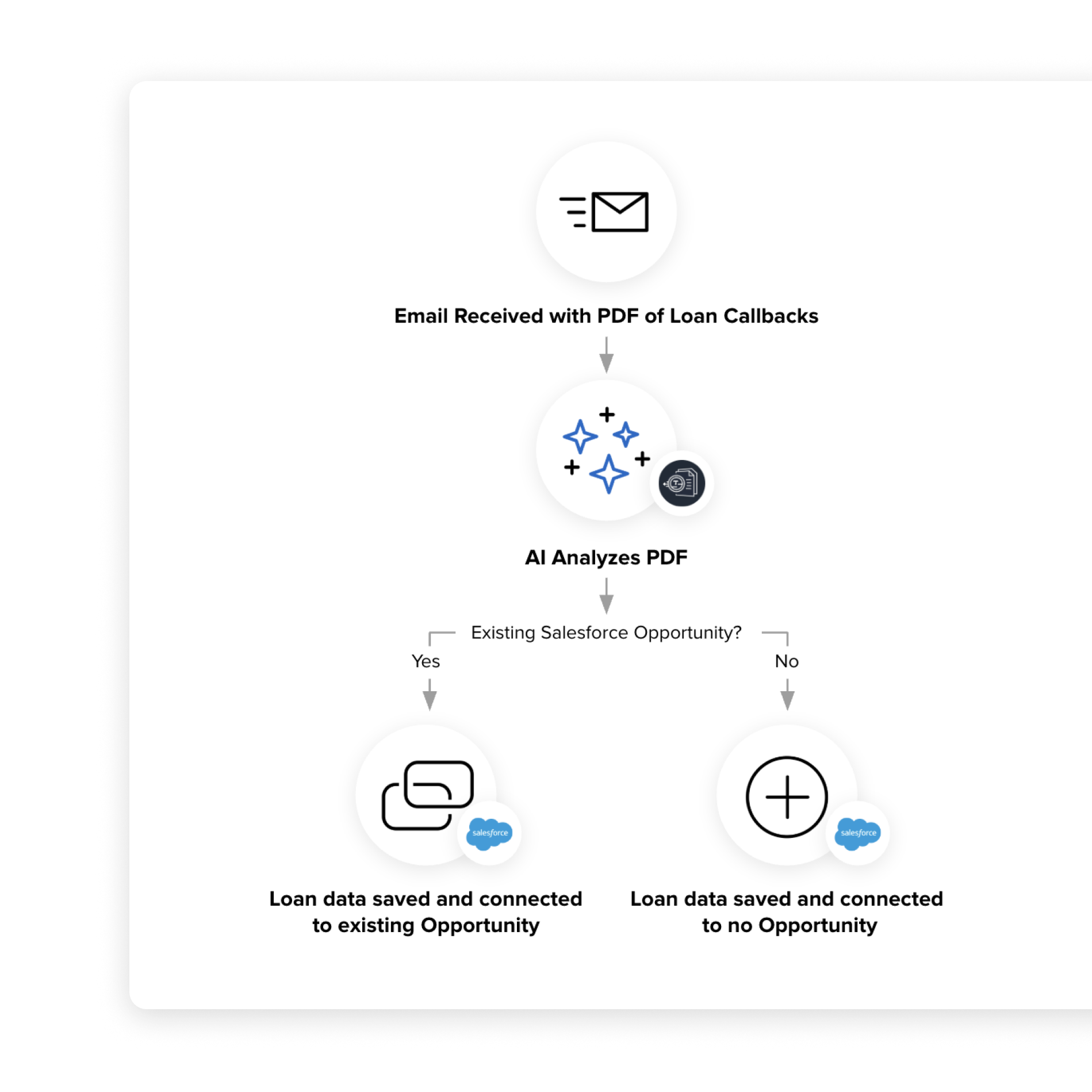
The paperwork behind a financial workflow is where staff time disappears. We build AI automation services that read, route, and act on documents and requests, so your team handles the exceptions instead of every case.
Member-facing banking platforms
Platforms that give banks and credit unions the self-service experience their core system cannot provide, connected to that core, so nothing is rekeyed between systems.
Regulated directory and search systems
Search and directory systems built for organizations that answer to regulators, where accuracy and auditability are the whole point.
Portfolio monitoring and reporting platforms
Monitoring and reporting tools that give private equity and investment teams one view of financial and operational performance across every holding, so diligence and value creation run off the same numbers.
Solving the real barriers to digital transformation in financial services
Most financial institutions are held back by the same handful of problems. Here is how we clear each one.
| Challenge | How we solve it |
| Manual workflows increase risk | We automate the repetitive process work and build the controls around it, so the same steps run the same way every time and produce the audit trail you need to prove it. |
| Siloed systems block visibility | We integrate your data sources and connect the platforms you already run, so reporting and real-time decisions draw from one current set of numbers instead of a manual reconciliation. |
| Legacy platforms limit growth | We modernize the infrastructure underneath, so you can add products, scale volume, and connect new services without rebuilding the foundation each time you grow. |
| Poor client experiences create churn | We build secure, self-service touchpoints that people actually use, so account holders and investors get what they need on their own and stay with you longer. |
| Compliance requirements add complexity | We build to standards like GLBA, FINRA, and SOC 2 from the first architecture decision, with access control and audit trails designed in rather than bolted on at the end. |
| Data security is non-negotiable | We design with encryption at rest and in transit, role-based access, and audit logging, so who can see what, and who did what, is provable at every step. |
Financial services teams we build for
We build for banks, credit unions, lenders, wealth managers, private equity firms, and insurance teams, too. Each one runs different workflows and answers to different regulators, so we build for the segment in front of us, not a generic template.

Private equity software
If you run operations or deal teams at a private equity firm, your data lives across a dozen portfolio companies, and none of it lines up. We build portfolio monitoring, reporting, and diligence workflows that pull financial and operational data into one view, so value creation and regulatory compliance stop competing for the same analyst hours. See our private equity software work for the fuller picture.

Banking and credit union platforms
Banks and credit unions come to us when the member experience is stuck behind a core system that was never built for self-service. We build member-facing platforms and account portals that connect to your core, so customers do more without calling a branch, and your staff stops rekeying data between systems.

Wealth management software
Wealth managers and advisory firms lose hours reconciling data that arrives from every custodian in a different format. We build single-source-of-truth platforms that consolidate custodian feeds into one clean view, so advisors spend their time with clients instead of spreadsheets.

Mortgage and lending software
Lenders lose deals in the gap between a borrower’s interest and a decision. We build loan origination and pre-qualification systems, plus the back-office automation that handles the paperwork behind them.
The technology stack behind financial services software
We lead with Salesforce, because most of the institutions we work with already run it, and the fastest path to value is building on the platform your team already owns. Here is the stack these builds sit on, grouped the way a buyer thinks about it.
- Platform: Salesforce development across Sales Cloud and Experience Cloud sits at the center of most financial builds, with client and account portals running on Salesforce Experience Cloud.
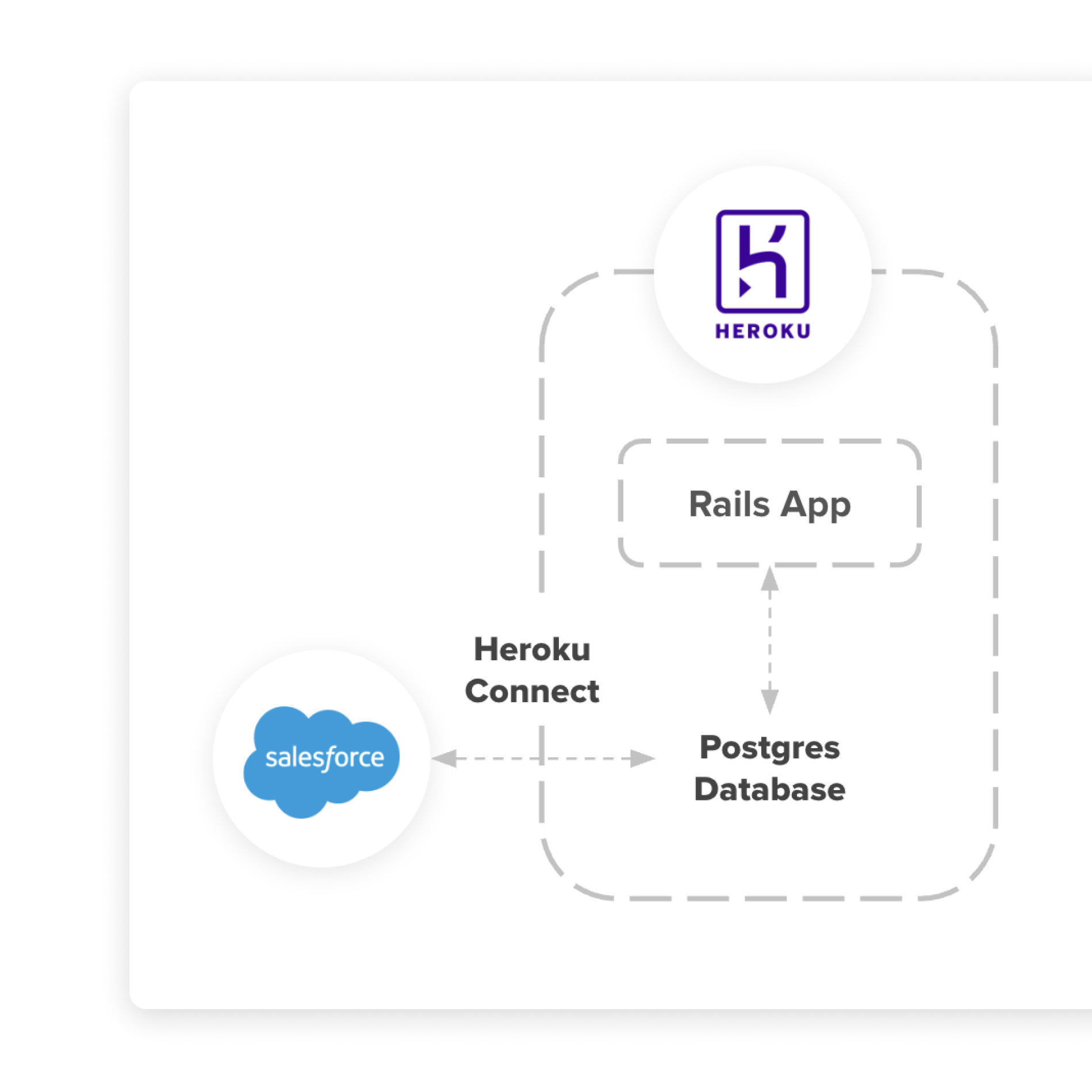
- Integration: MuleSoft and Heroku Connect wire the platform into your core banking system, CRM, and custodian feeds, so data moves without manual re-entry.
- Application: React.js for the front end and Ruby on Rails services, deployed on Heroku or Render, for the custom applications outside the Salesforce platform.
- Data: PostgreSQL for the systems of record, and Amazon Textract, where a build has to read and process documents at volume.
- AI: Agentforce for in-product digital assistants, plus services like SendGrid for the communications layer around a financial workflow.
Compliance and security for financial software, built in from the first architecture decision
We build financial software to the standards your regulators and auditors already hold you to, and we treat those standards as architecture, not a checklist at the end.
| Control | How we implement it |
| Regulatory standards | We build to the standards your firm answers to, such as GLBA for customer financial data, SOC 2 for system controls, and FINRA and GDPR where they apply. |
| Data access | Role-based access with least privilege, so each user sees only the data their job requires. |
| Encryption | Data is encrypted both in transit and at rest, whether it is stored or moving between systems. |
| Audit logging | Immutable logs that record every access and action, so you can show how a result was reached. |
| Data residency | Data is kept where your policy requires, including private cloud or on-premises, when residency rules demand it. |
| Testing cadence | Penetration testing on a schedule, so security is checked rather than assumed. |
How we build financial services software
Three phases, working software at every checkpoint, and the same in-house team from the first call through launch.

Blueprint Workshop (2 to 6 weeks)
We use this phase to find out whether the build is worth making before you spend real budget. We map how work moves through your team, audit the data and systems it would touch, and scope the work against the regulatory requirements up front. You leave with a clear use case and a technical roadmap, not a slide deck.

Agile build and integration (8 to 16 weeks)
Two-week sprints with working software at every checkpoint. The software plugs straight into the systems that matter, your core, CRM, and custodian feeds, so it reaches your data and moves work forward. We run on the Nova delivery model: AI generates production code, senior engineers shape, review, and ship it, and you pay for outcomes rather than hours. Everything runs against real workflows as it is built, so problems surface while there is still time to fix them.

Production launch and continuous optimization
Launch comes with monitoring, access controls, and the audit logging your compliance team needs. Then we stay involved, tuning the system against real usage and catching issues before your users do. On cost, a financial build is priced by scope rather than a menu: the drivers are the number of integrations, the depth of regulatory work, and the scale of any data migration, and a Blueprint Workshop puts real numbers against your specific build.



Frequently Asked Questions
What is financial services software development?
Financial services software development is the design and build of custom systems for banks, credit unions, lenders, wealth managers, and investment firms, covering the workflows that off-the-shelf platforms do not fit: client onboarding, compliance reporting, portfolio and account portals, loan origination, and back-office automation. Financial software development services differ from general software work because the data is regulated and the systems rarely stand alone, so access control, audit trails, and integration with your core, CRM, or custodian feed are architecture decisions from day one.
How do you secure financial software and keep it compliant?
Security and compliance are built into the architecture, not added at the end. That means encryption in transit and at rest, role-based access, and immutable audit logging, plus the specific standards your firm answers to, such as GLBA, FINRA, and SOC 2. We design access control and audit trails from the first architecture decision.
What technology stack do you use for financial services software?
Our financial builds are Salesforce-centered, across Sales Cloud and Experience Cloud, because most of the institutions we work with already run it. Around that, we use Heroku, Render, Ruby on Rails, React, and PostgreSQL, with MuleSoft and Heroku Connect for integration. You can read more on our technologies pages for the specific platforms.
What happens after launch?
We stay on as long-term partners, supporting your platform’s evolution with ongoing support and enhancement, managed services, and optimization.
How long does it take to build financial services software?
Most builds ship in weeks to a few months. Our agile process typically delivers a minimum viable product in 90 days or less, and we built and launched a wealth management firm’s platform in three months, ahead of schedule. The timeline depends mainly on how many systems you integrate with and how deep the regulatory scope runs.
What engagement models do you offer?
We run on the Nova delivery model. AI generates production code, senior engineers shape, review, and ship it, and you pay for outcomes rather than hours. That gives you faster delivery and a cost tied to features and fixes instead of a running clock, which is a better fit for a scoped financial build than open-ended hourly work.
Should we build custom software or buy an off-the-shelf platform?
Buy off-the-shelf when your workflow is standard and a packaged tool already fits it. Build custom when the workflow is the thing that makes your firm different, or when the real problem is integrating systems that do not talk to each other. If off-the-shelf is the right answer for you, we will say so, which is part of what a Blueprint Workshop is for.

Accelerate Digital Transformation for Your Financial Firm
Book your consultation to see how custom software can drive growth and efficiency.