
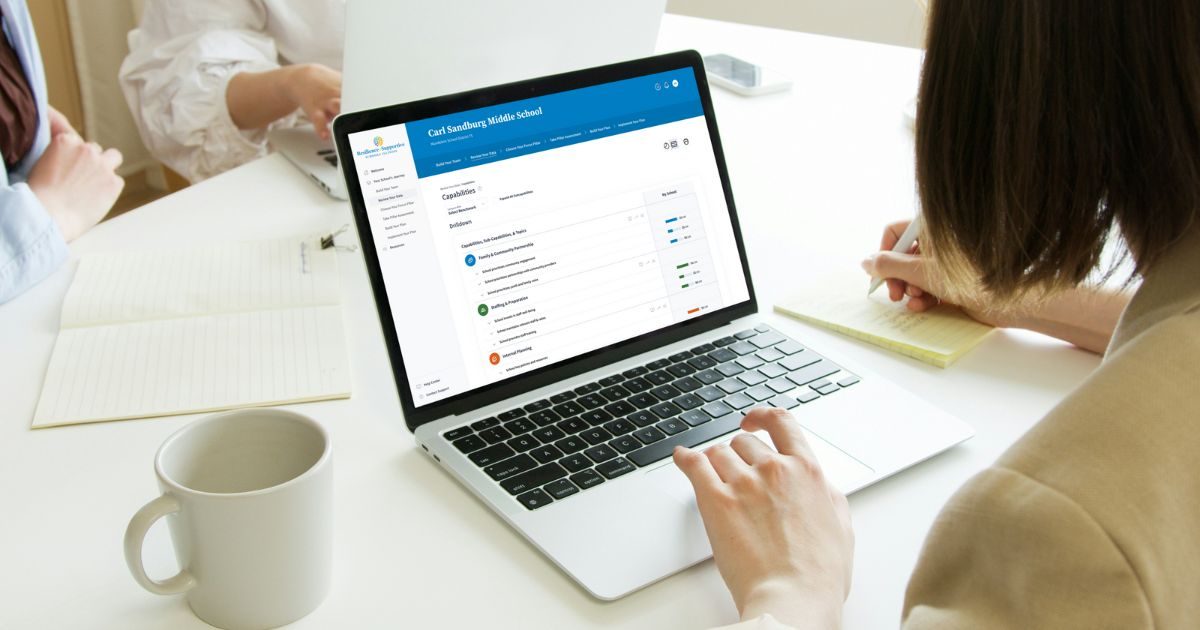
How Lurie Children’s Data-Driven Mental Health App Aids Schools
Discover how Lurie Children’s Hospital-backed Resilience-Supportive Schools Illinois used a data-driven mental health app to improve student well-being.
Company Overview
About Lurie Children’s Hospital and Resilience-Supportive Schools Illinois (RSSI)
The Resilience Education to Advance Community Healing Statewide Initiative (REACH) was launched in 2020 in partnership with the Center for Childhood Resilience (CCR) at Ann and Robert H. Lurie Children’s Hospital. Lurie’s is a nationally recognized leader in pediatric healthcare, dedicated to improving children’s well-being through specialized care, research, and community initiatives. One of its key programs, the Center for Childhood Resilience, focuses on equipping schools with trauma-informed practices and social-emotional learning strategies.
In partnership with REACH, Resilience-Supportive Schools Illinois (RSSI) was developed as a statewide initiative to provide schools with a data-driven approach to student mental health. In collaboration with partners such as the Parliament Collective Intelligence, Aim & Arrow, and the Illinois State Board of Education, RSSI empowers educators with insights and resources to create safer, more supportive learning environments.
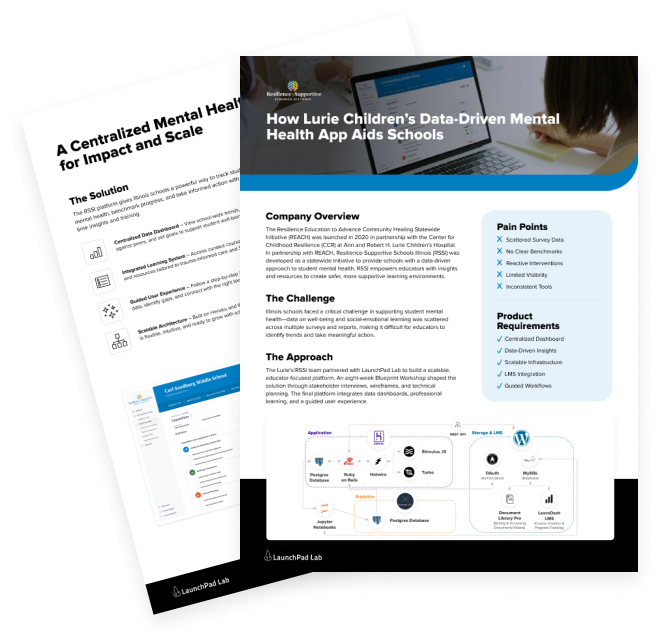
A Centralized Mental Health Platform Built for Impact and Scale
The Challenge
Addressing Fragmented Data in School Mental Health Support
Illinois schools faced a critical challenge in supporting student mental health—data on well-being and social-emotional learning was scattered across multiple surveys and reports, making it difficult for educators to identify trends and take meaningful action. Without a centralized system, administrators lacked visibility into broader needs at the school, district, and state levels and had no easy way to benchmark progress against other institutions.
CCR set out to address these gaps by creating a unified platform for RSSI that would centralize mental health data, provide comparative insights, and offer structured guidance to help schools implement effective interventions. The initiative aimed to shift schools from reactive problem-solving to proactive, evidence-based decision-making that improves student outcomes by equipping educators with data-driven tools.
The Approach
Building a Data-Driven Mental Health Platform for Schools
To address the challenges schools faced, Lurie Children’s Hospital partnered with LaunchPad Lab to develop a custom-built digital platform that would provide educators with clear insights and structured action plans. The process began with an eight-week Blueprint Workshop, designed to align stakeholders, define objectives, and ensure the platform met the needs of school administrators and mental health professionals.
During the workshop, the team:
- Conducted interviews with educators, administrators, and mental health professionals to understand pain points and user needs.
- Created wireframes and interactive prototypes to validate the platform’s structure and design.
- Developed a press release artifact to align with the platform’s vision and key outcomes.
- Established the technical foundation, selecting Heroku for scalable custom application hosting and WordPress with LearnDash for the Learning Management System (LMS).
This structured approach ensured that the final solution was intuitive, scalable, and fully integrated into existing school workflows.
The final solution incorporated a Heroku-powered data dashboard for real-time insights and goal setting, a WordPress-based LMS for professional development, and a guided user experience to simplify navigation. By combining these elements, Lurie delivered a robust, scalable tool designed to drive lasting improvements in student mental health support.
Lurie Children’s Hospital took a proactive approach by investing in a custom technology platform that could bridge the gap between data collection and action. With the help of LaunchPad Lab, they embarked on an eight-week Blueprint Workshop to gather educator insights, define key product requirements, and ensure the platform was built to serve the needs of Illinois schools.
The solution needed to be intuitive, data-driven, and seamlessly integrated with existing school processes. To achieve this, Lurie leveraged:
- A custom Heroku-powered web application for data visualization and analysis
- A WordPress-based Learning Management System (LMS) to house educator resources
- A guided user experience to simplify navigation and enhance engagement
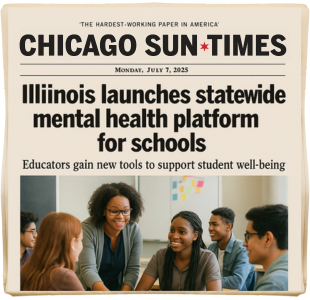
Chicago Sun-Times Features the Resilience-Supportive Schools Illinois Platform
The Solution
A Data-Driven Platform for School Mental Health Support
Lurie Children’s Hospital built a digital platform designed to help schools assess student mental health, identify gaps, and take meaningful action. By integrating real-time analytics with professional development resources, the platform provides a holistic solution that empowers educators to make data-driven decisions and implement structured interventions.
The platform includes:
- A centralized data dashboard that visualizes student well-being trends and benchmarks school performance
- A professional learning management system (LMS) that offers curated training and resources
- A guided user experience that simplifies data interpretation and action planning, connecting them with resources
By combining these features, the platform allows schools to proactively support student mental health, rather than reacting to challenges as they arise. This user-friendly, scalable solution ensures that educators have the insights and resources needed to foster a healthier learning environment.
Lurie Children’s Hospital developed a digital platform that empowers educators with data-driven insights and targeted professional development resources. By integrating survey data with customized learning tools, the system helps schools improve student well-being through informed decision-making and structured interventions.
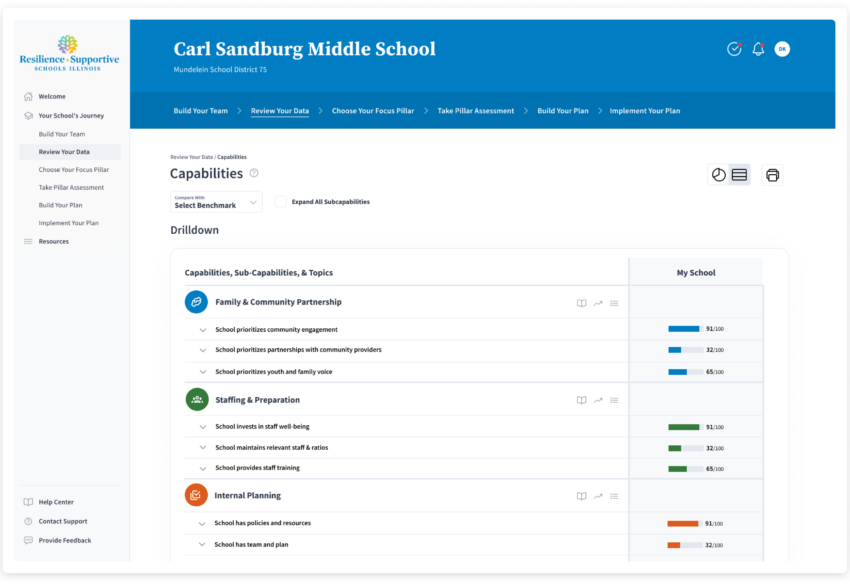
Resilience-Supportive Schools Illinois (RSSI) Data Dashboard
The data dashboard centralizes student well-being metrics, providing educators with:
- Analytics to assess school-wide social-emotional learning trends year over year
- Comparison tools that benchmark performance against similar schools
- Goal-setting features to create and track action plans for student support
Built on Heroku, the Resilience-Supportive Schools Illinois (RSSI) dashboard translates survey data into actionable insights, empowering educators to:
- View data visualizations that highlight school strengths and areas for improvement
- Benchmark performance against schools of similar size and demographics
- Set and track progress toward social-emotional learning goals
Integrated Learning Management System (LMS)
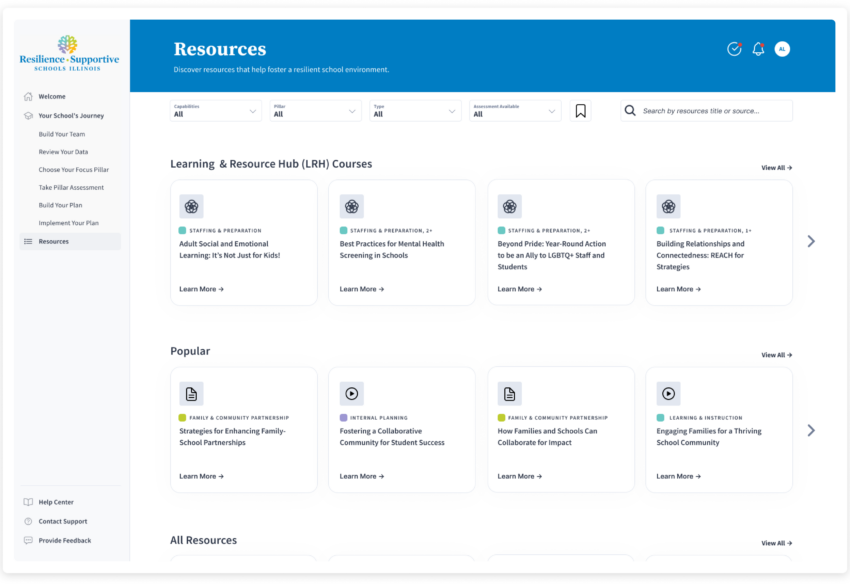
The LMS component ensures that educators have access to high-quality training and resources, offering:
- On-demand courses and webinars covering best practices in trauma-informed care
- Customizable learning pathways tailored to each school’s needs
- Professional development tracking to help staff stay engaged and measure progress
To complement the data insights, Lurie developed a WordPress-powered LMS using LearnDash, allowing schools to:
- Access on-demand training, webinars, and toolkits for professional development
- Build customized learning pathways based on data insights
- Align staff training with targeted areas for improvement
A Guided, User-Friendly Experience
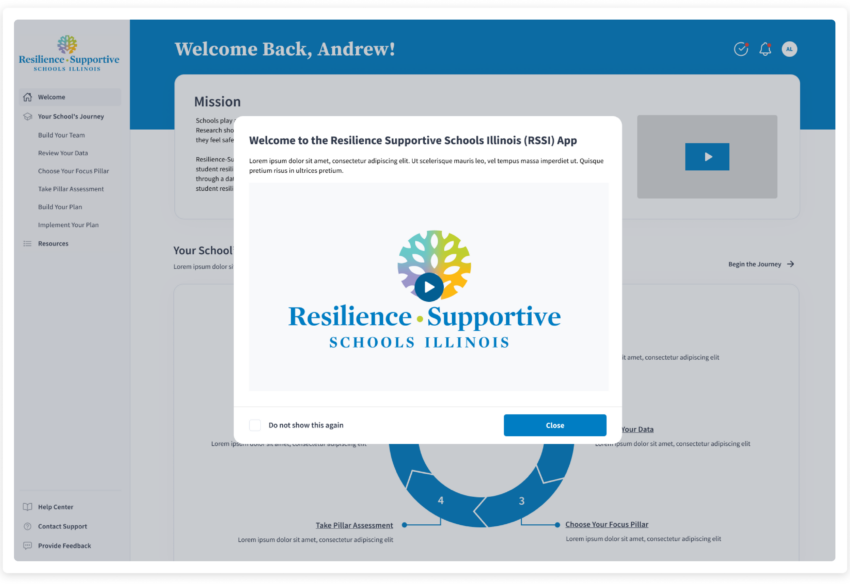
To enhance usability, the platform features a step-by-step guided workflow, helping educators:
- Navigate the platform easily with a structured user journey
- Quickly interpret survey data and apply insights to decision-making
- Identify and engage with relevant resources to support school-wide initiatives. During the pilot phase, educators provided valuable feedback on usability.
In response, Lurie refined the platform’s design by introducing a guided user journey (internally referred to as the ‘Yellow Brick Road’) to:
- Simplify onboarding and platform navigation
- Provide a clear step-by-step process for interpreting data and selecting resources
- Reduce confusion and increase engagement with the available tools
Impact and Success
A Scalable Foundation for the Future
Since launching in July 2024 as a pilot, the Resilience-Supportive Schools Illinois (RSSI) platform has been deployed to 280 schools across Illinois, with positive feedback from educators and administrators. Schools are now equipped with a centralized system to assess student well-being, benchmark progress, and access targeted professional development resources.
Early indicators show increased engagement from school administrators utilizing data-driven insights, improved accessibility to mental health training, and a more intuitive experience for users. With an expanded rollout and platform enhancements planned for July 2025 to align with the upcoming school year, Lurie Children’s Hospital is positioned to further expand the platform’s impact.
The success of this approach is rooted in its agile product development, allowing for adaptability and scalability within a six-month timeframe. Seamless integration between data insights and training resources, coupled with a human-centered design, ensures that schools can effectively implement social-emotional learning strategies. By leveraging Heroku for flexibility and WordPress for content management, the platform remains both powerful and easy to use, supporting long-term success for Illinois schools.
By utilizing Heroku for flexibility and WordPress for content management, Lurie Children’s Hospital ensured that its platform was both powerful and user-friendly, designed to support the long-term success of Illinois schools.
What’s Next for Resilience-Supportive Schools Illinois (RSSI)?
With a strong foundation in place, Lurie Children’s Hospital is now focused on:

Expanding data insights to provide deeper analytics and reporting

Growing the LMS content library with new courses and training materials

Optimizing user engagement based on continued educator feedback
By continuously refining the platform, Lurie Children’s Hospital reinforces its commitment to improving student mental health and social-emotional learning statewide—and beyond.
Partnering for Impact
Lurie Children’s Hospital remains at the forefront of social-emotional learning, using technology to transform education. If your organization wants to build a data-driven platform, integrate an LMS, or develop a custom software solution, consider partnering with LaunchPad Lab to bring your vision to life.
Interested in building something transformative? Contact us today to explore how we can collaborate on your next initiative.

Ready to Build Something Great?
Partner with us to develop technology to grow your business.