

Legal software development services for mid-market teams
Most legal software either forces your firm to change how it works or leaves the manual steps sitting exactly where they were. Good legal software development does the opposite: it fits how your matters, documents, and people already move. Tell us the workflow you need to fix and we will tell you whether custom is the right answer, including when it is not.
- 14+
years building custom software
- 760+
projects delivered for 250+ clients
- 90%
of clients stay with us beyond year one
What we build with our legal software development services
The difference between legal software that helps and software that gets in the way is fit. We build to your matters, your privilege rules, and the systems you already run, not a generic template your team has to adapt to. Here is what we build most.

Case and matter management
A single system of record for matters, deadlines, and documents, built around your intake-to-close workflow instead of a vendor’s fixed stages. We build these as custom web applications that replace the spreadsheet-and-shared-drive setup leaving everyone guessing which version is current.
- Matters, deadlines, and documents in one system of record
- Your intake-to-close workflow, not a vendor’s fixed stages
- Role-based access so each person sees only their matters
- Docket and deadline tracking with reminders

Document automation and contract review
Software that turns your templates and clause libraries into first-draft documents, and flags risk language before an attorney reads every page. This is generative AI development applied to legal work: the difference between reviewing everything and reviewing what matters.
- First-draft documents from your own templates and clause libraries
- Risk and non-standard-clause flagging before a full read-through
- Version control and clause-library management

eDiscovery and litigation support
Custom AI software development that narrows a large discovery set down to the handful of documents that matter, with search, transcript handling, and annotation built for how litigators work under deadline. This is a rare area where we have real standing: our WarRoom product served litigators directly before it became part of the Nextpoint litigation suite.
- Search and review that surfaces the documents that matter
- Deposition transcript handling and annotation
- Privilege review and production workflows
- Built by a team that shipped and sold a litigation product

Client and matter intake portals
Web and custom mobile app portals that route new work to the right team faster and give clients a clear window into status. They replace the email-and-phone-tag intake that stalls matters before they start.
- Self-service intake with a clear status view for clients
- Automatic routing and assignment of new matters, wired into our AI automation services
- Secure document upload and e-signature
- Conflict checks and onboarding steps built in

Integration with the systems your firm already runs
The build almost always includes connecting to the billing, document management, e-filing, and accounting systems your firm depends on, so new software adds capability without a second silo.
- Two-way sync with billing and accounting
- Document management and e-filing connections
- Single sign-on and identity integration

How is AI buying back the hours document review used to cost?
For law firms and legal departments, AI isn’t about replacing legal judgment. It’s about getting through the volume of documents, precedent, and case data that used to eat billable hours before an attorney ever weighed in.
AI-assisted tools can flag risk language and non-standard clauses in a contract before an attorney does a full read-through. In discovery, they can surface the handful of documents that actually matter out of a much larger set, rather than requiring someone to review all of them. And when it comes to drafting, they can turn case files, depositions, or intake notes into a first-pass summary an attorney edits instead of writing from scratch.
The tools we build sit around an attorney’s judgment, not in place of it. Attorneys keep making the calls that need a law degree. AI just clears the volume that doesn’t, and gives that review time back.

How we tailor our legal software development for law firms, corporate legal, litigation support, and government
A law firm and an in-house legal team have almost nothing in common as buyers. One protects billable capacity, the other manages volume without adding headcount. We build for both, plus two segments most agencies ignore.
Law firms and practice groups
The pressure is billable time lost to work that does not need a law degree. We build the case, document, and intake systems that give partners and associates that time back.
Corporate legal departments
The pressure is rising volume against a flat or shrinking budget. We build software that lets a lean team handle more matters, contracts, and requests without hiring, the same problem we solve for other professional services firms.
Litigation support and eDiscovery providers
Throughput is the business: how much document and transcript volume each reviewer clears under deadline, without a corner that gets a production challenged later. We build the platforms that raise that ceiling, so you take on more volume per reviewer instead of adding headcount.
Government and public sector legal teams
The pressure is compliance, records, and public accountability on legacy systems. We build and modernize the case and document tooling these teams run on, with the access and audit controls that the work demands.
Every legal build carries its own rules, but the shape is consistent: figure out what is worth building, prove it, then build and support it. What changes for legal work is the artifacts. We map matter workflows and privilege boundaries, not generic user journeys.

Legal tech blueprinting workshop (2 to 6 weeks)
A few weeks to find out whether the build is worth doing, before you spend real budget. We map how matters move through your firm and audit the data and systems the software would touch. We pin down the integrations you will need and define the privilege and access model up front. You leave with a matter workflow map, a scoped plan, and a technical roadmap you own, not a slide deck that guesses at it.

Agile build and integration (8 to 16 weeks)
Two-week sprints, with working software at every checkpoint. Not mockups, not status decks. Design and build happen together, and the software plugs into the case, document, billing, and e-filing tools that matter early, rather than bolted on at the end. Everything runs against real matters and real data as it is built, so problems surface while there is still time to fix them. Privilege and access rules are enforced from the first sprint, not retrofitted before launch.

Production launch and ongoing support (ongoing)
Launch comes with the security, privilege, and access checks built into the process, plus human-in-the-loop checkpoints wherever a lawyer should still make the call. Then we stick around. We tune the software against real use, add features as your practice and the rules change, and keep it maintained. For most firms this becomes an ongoing relationship, with one team from the blueprint through production rather than a handoff.
Why we build legal software for security, compliance, and privilege
Security on a legal build is a set of decisions made at the start, not a feature bolted on at the end. We handle client data on a least-privilege basis. Here is what that looks like in a build:
| Control | → | How we implement it |
| Access | → | Scoped to the matter, least privilege, each user sees only what the work requires |
| Vendor and model transparency | → | When compliance rules out an option, model choice reflects it. We select for what you are allowed to run, not only for raw capability. |
| Standards we build to | → | Built to SOC 2 control expectations covering access, change management, audit evidence, encryption in transit and at rest, and SSO/MFA, with platforms built to meet SOC 2 Type 2 and PIPEDA. m |

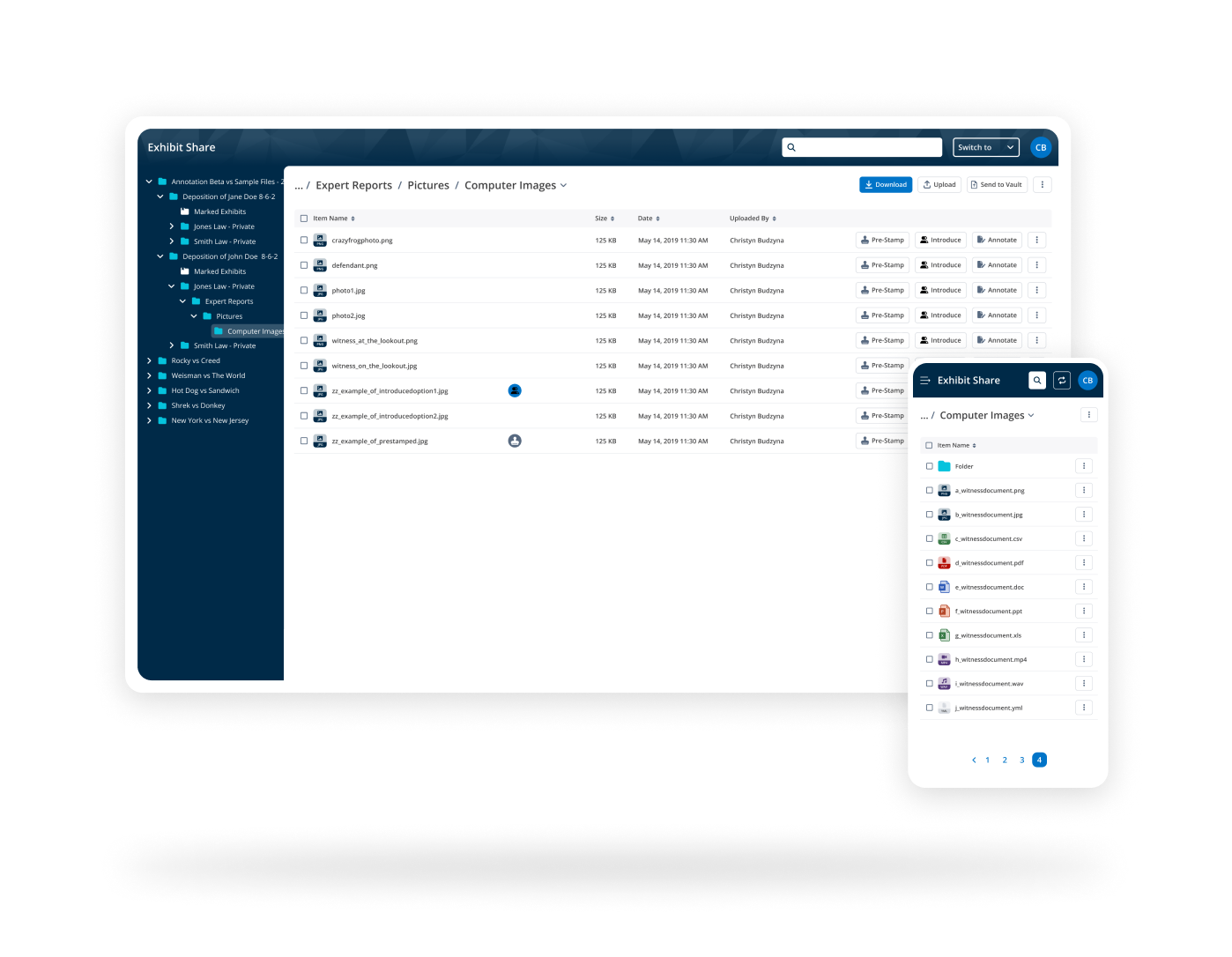
Optimized Legal File Management Solution
-

Reduced Cost & Dependency on 3rd-Party Software
-
Improved Customer Experience
-
Improved Ability to Scale Their Offerings
-

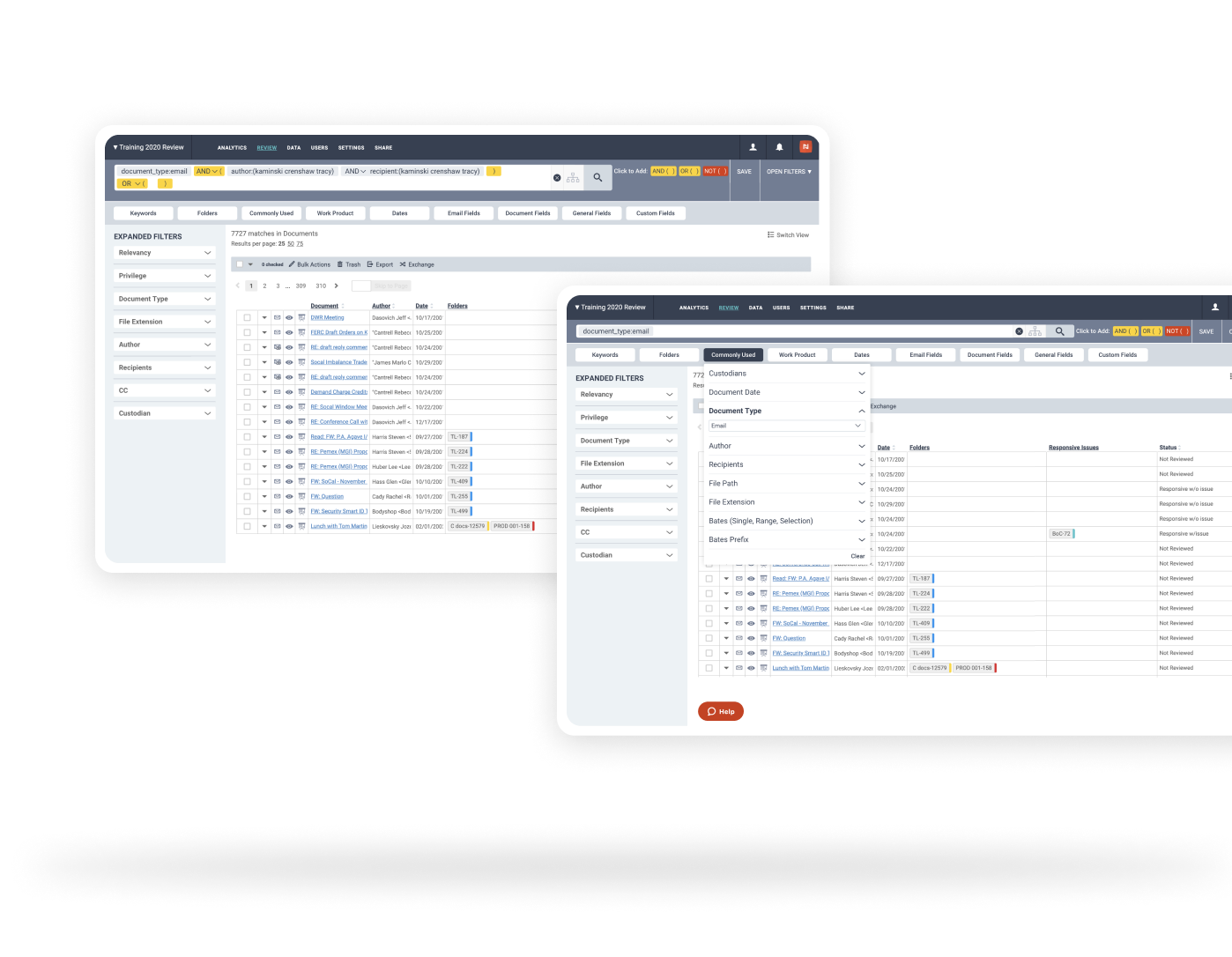
Design & Development Support for eDiscovery Software Used for Modern Litigation
-
Improved Advanced Search Capabilities
-
Improved Deposition Transcript Experience
-

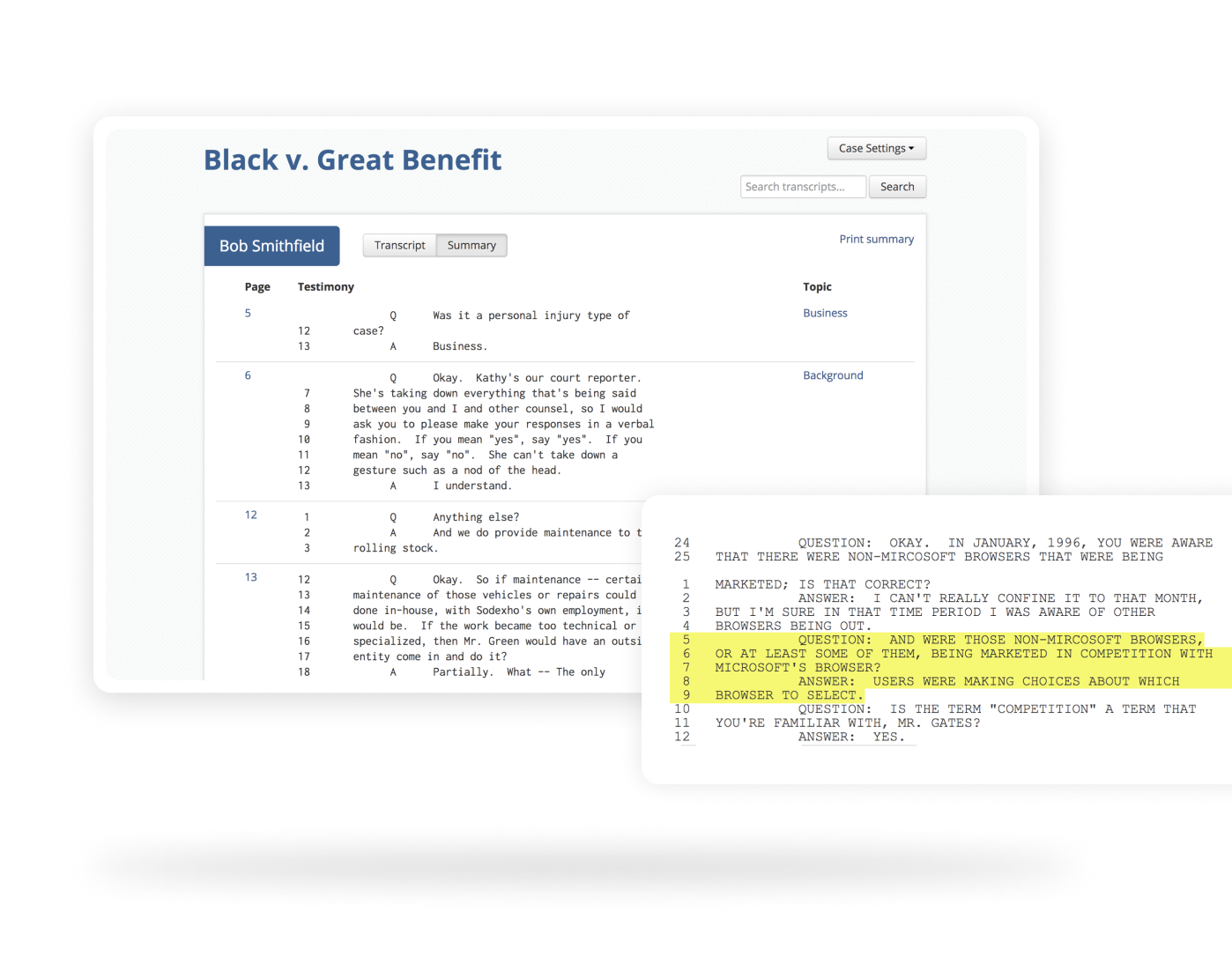
Our Internal Product for Lawyers Sold to Litigation Software Company
-
Improved Search & Transcript Annotations During Litigation
-
Improved Access to Pieces of Testimony During a Trail
-
What Our Clients Are Saying

Their strength is their phenomenal ability to take our vision, understand it, and develop it. They found a way to implement our vision of the platform.”
Joshua WoodworthDirector of Operations


Their attention to detail in the discovery process, and their selective choice of questioning is what really stood out to me. The information they were able to gather from each business unit provided insights that have evolved beyond just our website and have moved on to shaping many aspects of our overall marketing strategy.”
Growth Product ManagerAmplify Credit Union

We were having a hard time defining what a path forward would look like, and working with LaunchPad Lab helped us see what the path forward could be. We were able to better identify what we could do now and what we should save for later.”
Steven ShewfeltDirector of Data & Research

LaunchPad is absolutely interested in our success as an organization. They see our success as an indicator of their success, versus other outsourced type of arrangements where frankly it's, "Hey, we coded this. It's done to spec. If you don't like it, you should've written a different spec." I got none of that working with LaunchPad Lab. They're in it with us all the way.”
Neil MorganFounder

The biggest reason I would recommend LaunchPad Lab is their ability to take what we had envisioned and, instead of being order takers, be actual contributors and collaborators to get us where we need to. They are not afraid to challenge what they don't believe is right.”
Arman GhoshFounder
Frequently asked questions
What is custom legal software development?
Custom legal software development is building software around how your firm actually runs a matter, instead of forcing your practice into an off-the-shelf tool. Off-the-shelf products cover the common 80% and leave the workflows that make your firm distinct unsupported. A custom build maps to your intake, documents, billing, and privilege rules directly. It also connects to the systems you already run, so the software removes manual work instead of adding a new silo to manage.
Can you integrate with the systems your firm already uses?
Yes. Most legal builds include connecting to the case management, document management, billing, accounting, and e-filing systems your firm already depends on, so the new software adds capability without a second silo.
Can AI tools maintain attorney-client privilege and confidentiality?
Yes, if they’re architected for it from the start. We build AI features on infrastructure where client data is not used to train third-party models, and we’re specific with you about which vendors and models are involved in any workflow we build, so your firm can make an informed call about privilege and confidentiality. For matters where that risk is unacceptable, we scope tools to run on private or on-premises models instead of shared, third-party APIs.
Is AI accurate enough to trust for legal document review?
Not on its own, and we don’t build it to work on its own. AI-assisted review is good at surfacing what a human should look at next: the clause that deviates from your template, the document buried in a large discovery set, the inconsistency between two drafts. Making the legal judgment call is a different matter. We design these tools so that an attorney makes that call every time, with the AI output as a starting point rather than a final answer.
How long does a legal software project take?
It starts with a Blueprint workshop that runs 2 to 6 weeks and ends with a scoped plan. From there, a first production release is usually weeks rather than quarters, because our Nova delivery model has AI generate production code while senior engineers review and ship it. Full platforms take longer and are built in short, reviewable cycles so you see working software early.
How much does custom legal software cost?
Cost depends on scope, which is exactly what the Blueprint workshop is built to settle. Rather than quote a number that would be wrong for most firms, we run a fixed-scope few weeks that produces a prioritized plan and a clear build sequence, so you know what you are committing to before you commit a budget. A focused first build costs far less than a full platform, and you own the plan either way.
What are practical AI use cases for law firms and legal departments right now?
The applications delivering real value right now fall into a few categories: contract review tools that flag risk clauses before a full read-through, document review and e-discovery tools that narrow a large set down to what’s actually relevant, matter intake tools that route new work to the right team faster, and drafting tools that turn structured inputs into a first-pass summary, memo, or client communication.

Ready to Build Something Great?
Partner with us to develop technology to grow your business.